

Phuket Traffic Survival Guide 2026: Why the “3-Hour Rule” is Your New Best Friend
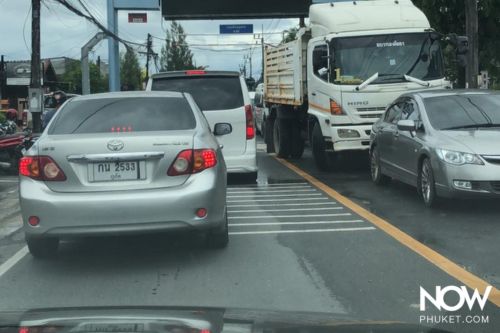
If you’re reading this while sitting in the back of a van on Thepkasattri Road, watching a coconut tree move faster than your vehicle, welcome to Phuket in 2026.
Phuket has officially hit the “Top 10 Most Searched Cities” globally this year, and while that’s great for the local economy, it’s a bit of a nightmare for your commute. With record-breaking tourist numbers and a road network that is—to put it politely—under heavy renovation, getting from point A to point B requires more than just a GPS; it requires a strategy.
Here is everything you need to know about surviving the Phuket gridlock and why the “3-Hour Rule” is no longer a suggestion—it’s a survival tactic.
Phuket 2026 Traffic & Travel Time Table
| Route | Off-Peak (Car/Taxi) | Peak Traffic (Car/Taxi) | Smart Bus (All Hours) | The “Why” behind the delay |
| Airport ↔ Patong | 45–55 mins | 1 hr 20 mins+ | 1 hr 45 mins | Patong Hill bottleneck & Kathu construction. |
| Airport ↔ Rawai | 1 hr 10 mins | 2 hrs 15 mins+ | 2 hrs 10 mins | Heroines Monument bottleneck is back in 2026. |
| Airport ↔ Old Town | 40 mins | 1 hr 10 mins | N/A (Airport Bus only) | Koh Kaew intersection congestion. |
| Patong ↔ Old Town | 25 mins | 55 mins | N/A | Central Festival / Floresta mall traffic. |
| Kamala ↔ Bang Tao | 15 mins | 35 mins | 30 mins | Narrow roads near Laguna entrance. |
| Rawai ↔ Kata | 20 mins | 45 mins | 35 mins | Karon Hill & sunset viewpoint crowds. |
The “3-Hour Rule” Explained
In 2025, you might have risked leaving Rawai or Nai Harn two hours before your flight. In 2026, that is a one-way ticket to buying a very expensive last-minute flight home.
The 3-Hour Rule is simple: Whatever Google Maps tells you the travel time is to Phuket International Airport (HKT), add 60 minutes. Why? Because Phuket’s main artery, Highway 402, is currently handling 2.5 times the traffic it was designed for. A minor fender bender at the Heroines Monument or a heavy rain shower can instantly turn a 45-minute drive into a two-hour ordeal. If you are flying internationally, we actually recommend leaving your hotel 4 hours before departure.
The 2026 Bottleneck Map: Where Time Goes to Die
1. The Heroines Monument (Thalang)
The legendary underpass project was officially “postponed indefinitely” late last year, which means the 2026 high season is dealing with the same old bottleneck, just with more cars. This intersection is the single biggest point of failure on the island.
- Peak Pain: 7:30 AM – 9:30 AM and 4:30 PM – 7:00 PM.
- Survival Tip: If you’re coming from the North (Airport) to the South (Rawai/Chalong), try the Highway 4027 “backway” through Pa Khlok. It’s scenic, and while longer in distance, it often bypasses the Thalang standstill.
2. Patong Hill & The Tunnel Construction
As of early 2026, the long-awaited Kathu-Patong tunnel is finally in the early stages of site preparation. This means heavy machinery and occasional lane closures on the existing hill road.
- The Risk: Patong Hill remains the most dangerous road on the island. During rain, the steep incline becomes slippery, leading to accidents that can shut down the road for hours.
- Survival Tip: Check local Facebook groups like “Phuket Traffic” before you climb the hill. If it’s blocked, the only way around is the long loop through Kamala or Karon.
3. Central Phuket / Floresta Intersection
With the SFX Cinema and high-end shopping drawing thousands of visitors daily, the intersection near Central Festival has become a “permanent orange” zone on Google Maps.
- Survival Tip: If you just want to get from Patong to Phuket Old Town, consider using the “shortcut” through Kathu (behind the golf courses) rather than hitting the main bypass road.
Grab, Bolt, or InDrive? The 2026 Transport App Debate
In 2026, the “Taxi Mafia” has largely been tamed by the sheer dominance of ride-hailing apps, but they aren’t all created equal.
- Grab: The most reliable and “official.” You can get a Grab at the airport now (Exit 3), but you’ll pay a premium.
- Bolt: Usually 20% cheaper than Grab. However, during peak traffic, many Bolt drivers will cancel your ride if they see you’re heading into a “dead zone” like a 1-hour crawl to the airport.
- InDrive: The “haggler’s choice.” You suggest the price. Great for long-distance trips (like Rawai to the Airport), but make sure you’re offering a fair rate or no one will pick you up.
Pro-Tip: If you’re on a budget, the Phuket Smart Bus is the MVP of 2026. For a flat fee of 100 THB, it runs from the Airport all the way down the west coast to Rawai. It’s air-conditioned, has Wi-Fi, and while it isn’t “fast,” it’s predictable.
How to Beat the Heat (and the Traffic)
- Travel on “Island Time”: If you can, move between 11:00 AM and 2:00 PM. Most tourists are at the beach, and the morning/evening commuters are at their desks.
- The “Two-Wheel” Temptation: Motorbikes are the only way to “skip” traffic, but only if you are an experienced rider with a valid International Driving Permit (IDP). Police checkpoints are everywhere in 2026, especially in Patong and Rawai. No license = heavy fines and no insurance coverage.
- Check the “SF Cinema” Test: Strangely enough, checking cinema showtimes at Central Phuket (SF Cinema) can tell you how busy the mall area is. If there’s a blockbuster starting at 6:00 PM, the bypass road will be a parking lot at 5:30 PM.
Final Verdict
Phuket in 2026 is a world-class destination, but its roads are still catching up. Embrace the slow pace. Don’t book tours that require 4 hours of van travel in a single day. Choose a “base” (like Kamala or Bang Tao) and explore locally.
And for the love of all things tropical, leave for the airport early.